uk professional services listings,
uk review websites,
uk service listings,


For private clinics in the United Kingdom, the digital landscape is the primary battlefield for new patient acquisition. Whether you specialise in aesthetics, mental health, orthopaedics, or general practice, potential patients increasingly bypass traditional word-of-mouth recommendations in favour of "near me" digital searches. If your clinic does not command a prominent presence in local map packs and regional business registries, you are effectively ceding your most valuable local leads to competitors.
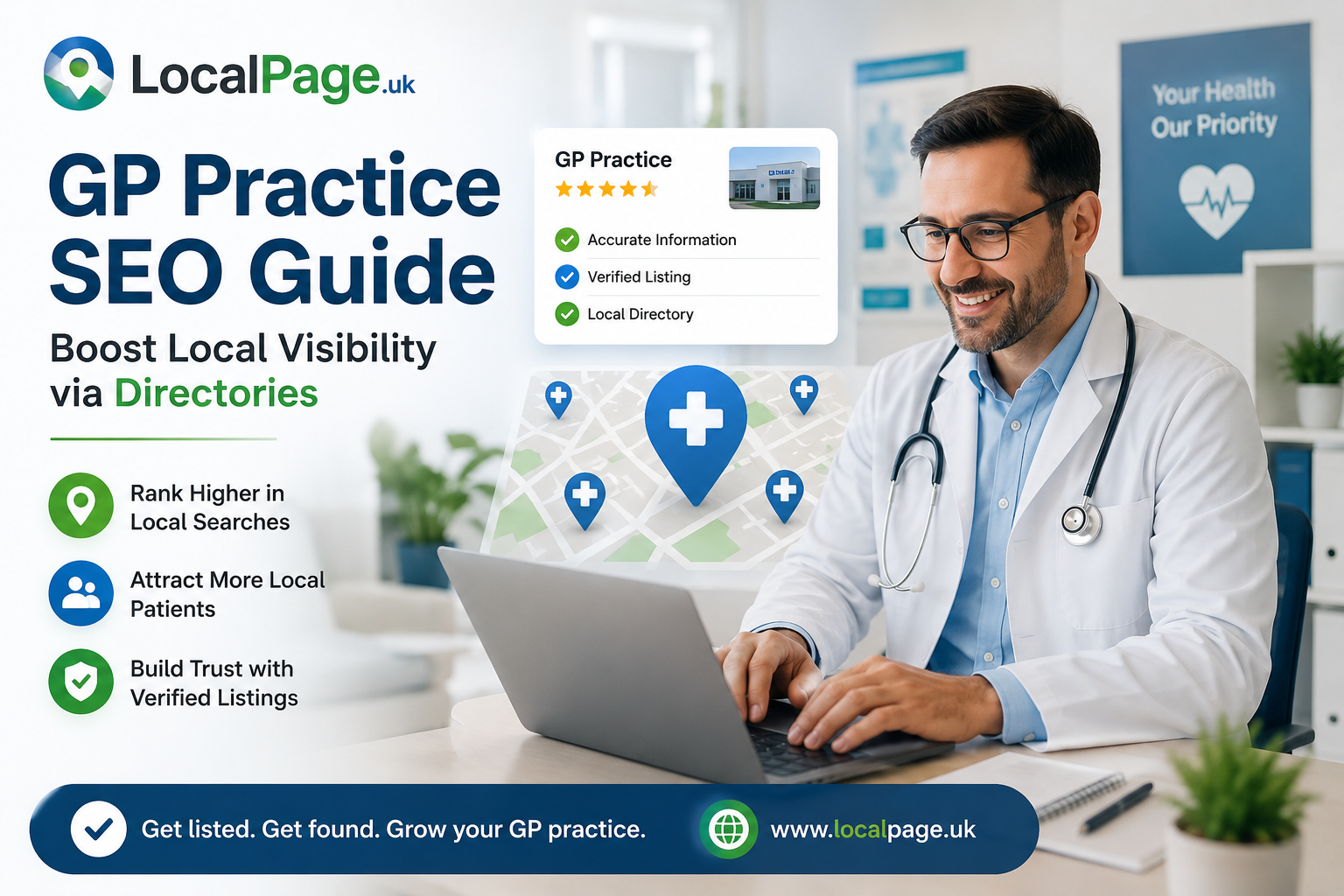
Achieving high visibility requires more than a fast, responsive website; it demands a comprehensive, highly accurate, and strategically managed presence across uk professional services listings. By establishing a robust digital footprint, you satisfy the requirements of modern search engine algorithms, build unquestionable patient trust, and secure the top-tier rankings necessary to thrive in the modern UK healthcare market.
In the context of private healthcare, local directory listings act as the "validation layer" for your clinic. When a patient searches for a clinic, search engines must determine which businesses are legitimate, accessible, and high-quality. Directories serve as critical data sources that verify your Name, Address, and Phone number (NAP).
For clinics, this validation is intrinsically linked to E-E-A-T (Experience, Expertise, Authoritativeness, and Trustworthiness). Search engines cross-reference your listing data with official datasets, such as Care Quality Commission (CQC) records and professional body registrations. A consistent presence across a curated company directory uk platform signals to Google that your clinic is a well-established, trustworthy, and compliant medical entity, which directly enhances your ranking performance.
Private healthcare falls under the "Your Money or Your Life" (YMYL) category, meaning Google applies the highest scrutiny to your digital content. If your NAP data is inconsistent across directories, or if you appear on "spammy" link-farm directories, your authoritative standing is damaged. Conversely, being listed on high-authority regional portals demonstrates industry relevance and deep-seated local engagement.
If you are ready to expand your footprint, the process of adding your clinic must be methodical. Rushing the process often leads to duplicate listings, inconsistent NAP data, or missed verification steps.
Before you submit your clinic anywhere, ensure your "Golden NAP" (Name, Address, Phone) is finalised.
You do not need to be listed in every obscure directory. Focus your efforts on directories that offer genuine authority. A strategic approach involves a mix of:
When you are ready to add company listing uk details to these platforms, pay close attention to categorization. Ensure your clinic is placed in the most relevant sub-category (e.g., "Private Medical Clinics" or "Aesthetic Services"). Use the description field to naturally incorporate services, such as "minor surgery," "diagnostic imaging," or "physiotherapy," without resorting to keyword stuffing.
An optimised listing is a conversion engine. It should not only provide search engine signals but also serve as a compelling introduction for potential patients who discover you through the directory.
Patients feel more comfortable when they know what to expect. Your directory profiles should feature high-quality imagery of your facility. This includes:
When you use a platform to list company online uk, ensure the URL provided points to a dedicated location page on your website rather than just the homepage. If you operate multiple clinics, this ensures that local search signals are directed to the correct geographical landing page, significantly boosting your chances of ranking in local pack results for each individual branch.
For clinic groups, maintaining local SEO accuracy is substantially more complex. You must avoid the pitfall of "cannibalisation," where multiple locations compete for the same keyword searches, ultimately diluting your visibility.
Each clinic in your group must be treated as a distinct entity. Use a consistent structure for your location pages, but ensure the unique identifiers are strong:
By treating each clinic as an independent node in your network, you amplify your coverage across the entire UK. Using a local search directory uk service that allows you to manage multiple listings under one account can simplify the administrative burden while maintaining the necessary location-specific integrity.
Your directory listings are often the first place new patients look for reviews. In the healthcare sector, a high volume of positive, recent, and authentic reviews is a major ranking signal for Google's Local Pack.
Do not wait for reviews to happen organically. Implement a post-treatment process to encourage feedback.
While directories provide external signals, your website must be technically prepared to receive the "link juice" and trust signals these listings provide. Implementing Schema markup (specifically MedicalBusiness or LocalBusiness) is non-negotiable.
By providing Google with structured data, you remove ambiguity about your business details. Schema markup allows you to explicitly tell search engines: "This is my location, these are my hours, this is the range of services I provide."
When you add company listing uk data to directory sites, verify that the structured data on your website is updated to match. If your website says one thing and your directory listings say another, you create a "NAP conflict" that can confuse search crawlers and harm your rankings.
Artificial Intelligence and Search Generative Experience (SGE) are changing how patients find local services. AI search tools now synthesize information from multiple sources to provide a direct answer.
To be featured in these AI-driven summaries, your clinic needs to be:
How do you know if your listing efforts are paying off? You need to move beyond simple vanity metrics and track conversions.
Even experienced clinic owners make mistakes that can throttle their local search success.
Even a minor discrepancy (e.g., "10 High Street" vs "10 High St") can cause data fragmentation. Treat your NAP data as a single source of truth and update it everywhere simultaneously.
Avoid automated submission services that push your details to thousands of irrelevant, "zombie" directory sites. Focus on high-authority platforms that provide genuine value. A single link from a premium directory uk is worth more than a thousand links from low-quality, automated sites.
An account created two years ago with outdated phone numbers or old business hours is worse than no account at all. Schedule a quarterly audit to verify that your directory details are still current.
Use a local search tracking tool to keep an eye on your competitors. See where they are listed and notice their review volume. This helps you identify gaps in your own strategy and opportunities to gain an advantage.
Partnering with an established, high-quality sme directory uk partner is a vital part of a modern healthcare marketing programme. It provides not just a listing, but a verified endorsement from a platform that search engines trust.
Whether you are a new private clinic looking to make your mark or an established healthcare group aiming to defend your local territory, the investment in local directory optimization yields compounding returns. You are building digital real estate that works for you 24/7, catching high-intent patients exactly when they need your services most.
Local SEO is a marathon. You may see initial changes in citation accuracy within a few weeks, but substantial improvements in local search visibility typically take 3 to 6 months of consistent effort in directory building, profile optimization, and review acquisition.
Yes, absolutely. In fact, you should. However, ensure that each branch has its own unique, dedicated profile page with its own specific address, telephone number, and link to the corresponding location page on your website.
Free listings provide basic NAP signals, which is important for foundation work. However, investing in a paid company listing uk package often provides premium features like verified badges, enhanced profile placement, and do-follow links that significantly boost your authoritative impact.
The NAP (Name, Address, Phone) is the absolute priority. If search engines can't verify your location, they cannot confidently rank you for local searches. Ensure these three data points are accurate, complete, and consistent across every directory.
The 3-Pack is determined by a complex mix of relevance, distance, and prominence. If your NAP is correct, focus next on your Review Velocity (the rate at which you acquire new, positive reviews) and your website’s local optimization (local keywords, clear service pages).
If you have the time and technical skill, you can manage your listings yourself. However, for growing clinic groups, a dedicated agency or a robust automated tool can help you maintain consistency at scale, preventing the errors that often occur during manual data entry.
Your CQC registration is a vital trust indicator. Ensuring your CQC-registered name and address are used consistently across all your digital listings helps search engines confirm your status as a legitimate, regulated medical entity, which is a major trust booster for your E-E-A-T score.
A citation is a mention of your business NAP, even without a clickable link. A backlink is an active, clickable hyperlink from another site to yours. Both are beneficial for SEO; citations provide local authority, while backlinks provide broad domain authority.
READ MORE - UK Professionals listing
READ MORE - Reviewed Companies directory uk
READ MORE - Sponsored Listings uk directory
Get In Touch
Email: contact@localpage.uk
Website: www.localpage.uk